Jump to Content

Your impact, our solutions

Impact stories hero lottie

Colorado Department of Transportation (CDOT) partners with Waze for Cities

See how the Department of Transportation (CDOT) uses Waze for Cities to radically improve road safety and traffic flow.
Colorado IMO Poster Image

Link to Youtube Video (visible only when JS is disabled)

Stories of people, places, and partners

See how Google's cities solutions are making an impact on communities,
the environment, and economies.
Filter by
Tree canopy
More than 50% of Angelenos live in areas with less than 10% tree canopy coverage and 44% live in areas with extreme heat risk. Using AI and aerial imagery, the Tree Canopy Lab helps Los Angeles identify areas to plant trees and increase shade. By 2021, Los Angeles had planted 90,000 trees and set a goal to plant 20,000 trees annually going forward.
Read the full story
Icon (1).svg
EIE’s Tree Canopy Lab cools heat islands in Los Angeles
Sustainability Climate resilience
London’s air pollution
Air pollution causes 9,400 early deaths in London every year. Nitrogen dioxide (NO2) levels were found to be around 50% higher on major roads compared to quieter, local roads. The Breathe London project was launched by the Environmental Defense Fund Europe, the Mayor of London, and other partners to map and measure pollution. The project uses a network of over 100 lower-cost sensor pods to understand and combat its NO2 pollution problem.
Read the full story
Icon (1).svg
London's pollution problem
Sustainability Urban planning Sustainable transportation Climate resilience Mobility Crisis management
Fuel efficiency
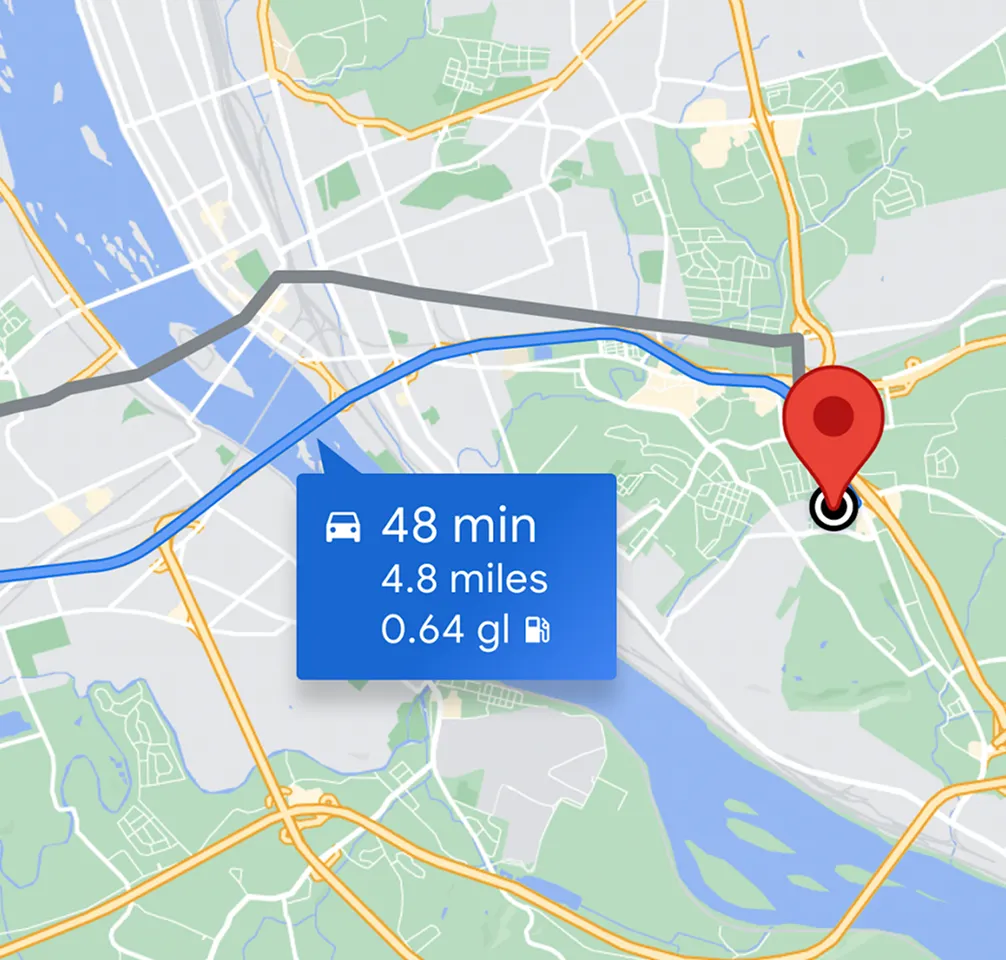
AI-powered routing on Google Maps provides drivers the most fuel-efficient path, reducing millions of tons of emissions worldwide. In 2024, the AI-powered feature enabled more than 2.7 million metric tons of GHG emissions reductions. This is comparable to taking approximately 630,000 gasoline-powered cars off the road for a year.
Read the full story
Icon (1).svg
Fuel-efficient routing impact
Mobility Sustainability Traffic management Sustainable transportation
Iberian lynx
It is crucial to safeguard wildlife in areas that are shared with human infrastructure. Real-time alerts warn drivers when they enter endangered lynx zones to prevent roadkill and protect wildlife. During a pilot conducted, these alerts resulted in zero reported lynx accidents in alerted zones, successfully protecting the Iberian lynx population.
Read the full story
Icon (1).svg
Protecting the Iberian lynx in the Iberian Peninsula
Sustainability Road safety Crisis management
Flood forecasting collage
In 2025, Google’s Riverine flood forecasting coverage expanded to over 150 countries, reaching 2 billion people in case of the most significant and impactful riverine flood events. The model offers up to a 7-day lead time reliability and is powered by a breakthrough global hydrological AI model.
Read the full story
Icon (1).svg
How we’re helping partners with improved and expanded AI-based flood forecasting
Sustainability Climate resilience Crisis management Data contribution
Public transportation
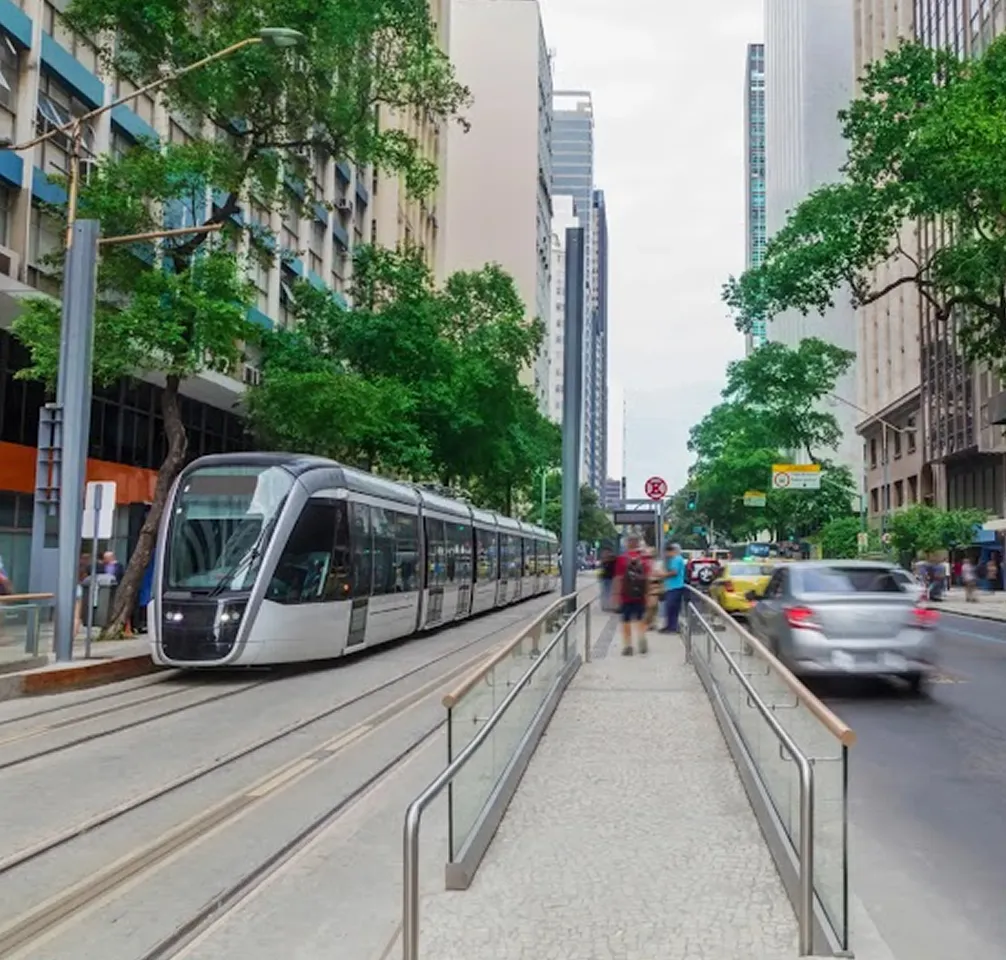
Google Maps supports urban mobility by providing access to public transit directions (bus, train, subway, and ferry) to billions of users daily, processing over 3 billion kilometers of public transit results per day. In 2023, over 30,000 kilometers of bike lanes were added to Google Maps, and individuals can find nearby bike and scooter shares in over 400 cities worldwide.
Read the full story
Icon (1).svg
How Google Maps is helping cities improve urban mobility
Mobility Sustainability Traffic management Sustainable transportation
c2-how-eie-helped-2x.webp
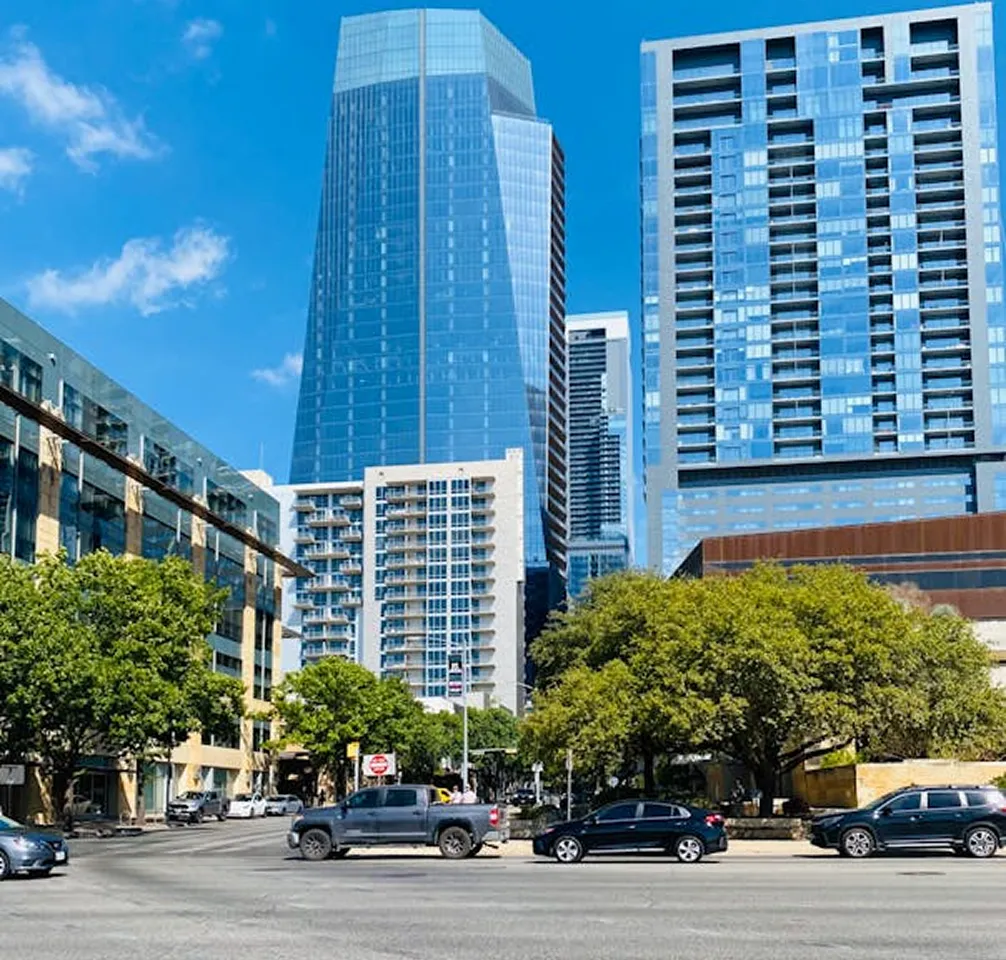
Cities like Austin, Texas are looking for ways to prevent “heat islands”—urban areas with higher temperatures due to roads and buildings that absorb and re-emit heat. The city used insights from Tree Canopy tool to develop its Community Tree Priority Map. The tool’s AI and aerial imagery helped detect tree canopy coverage, guiding planting efforts in the eastern parts of the city, which have low tree coverage and higher ambient temperatures.
Read the full story
Icon (1).svg
How EIE helped the city of Austin, Texas create its Community Tree Priority Map
Sustainability Climate resilience Urban planning
Bengaluru map
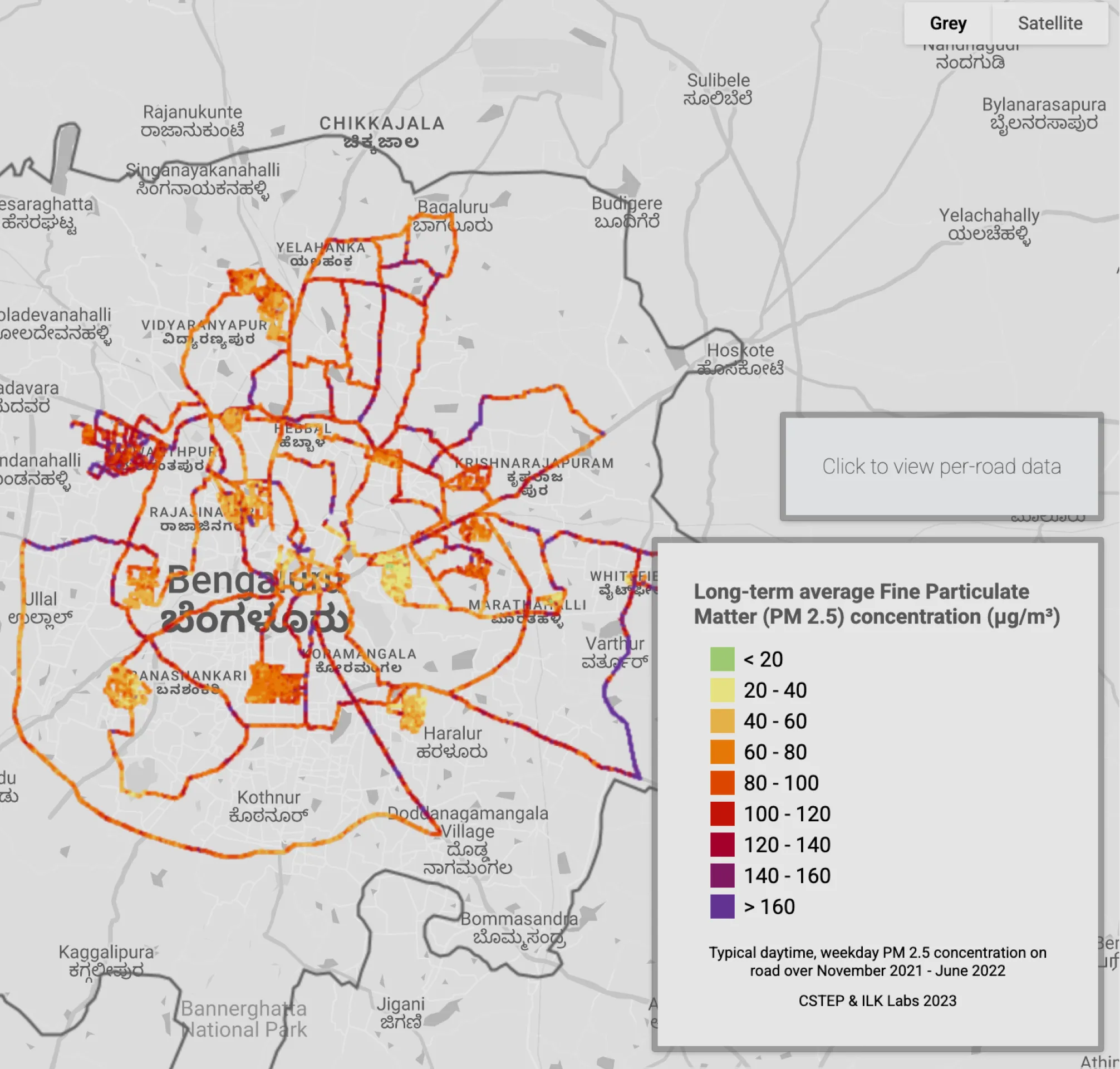
In 2023, we launched street-by-street air quality data for Bengaluru in EIE—our first city to launch in India. This launch was the result of a year and a half of deep scientific partnership with the Center for Study of Science, Technology and Policy (CSTEP) and ILK Labs. CSTEP collected air quality data by installing sensors on its cars and driving them around precalculated routes in Bengaluru
Read the full story
Icon (1).svg
Hyperlocal air quality data in Bengaluru, India
Sustainability Climate resilience Urban planning
Campo Grande
The city of Campo Grande, Brazil, is leveraging Google's technology to drive sustainability, reduce carbon emissions, and improve the urban quality of life for its citizens. The city uses EIE to estimate carbon emissions and measure progress, guide policies, and evaluate solar potential. GEE helps the city monitor land use, vegetation, and air quality, while Waze for Cities optimizes traffic flow and plans interventions.
Read the full story
Icon (1).svg
Google's tools power Campo Grande's ambitious climate action plan
Mobility Sustainability Economic growth Traffic management Climate resilience Sustainable transportation Urban planning
Steel plant
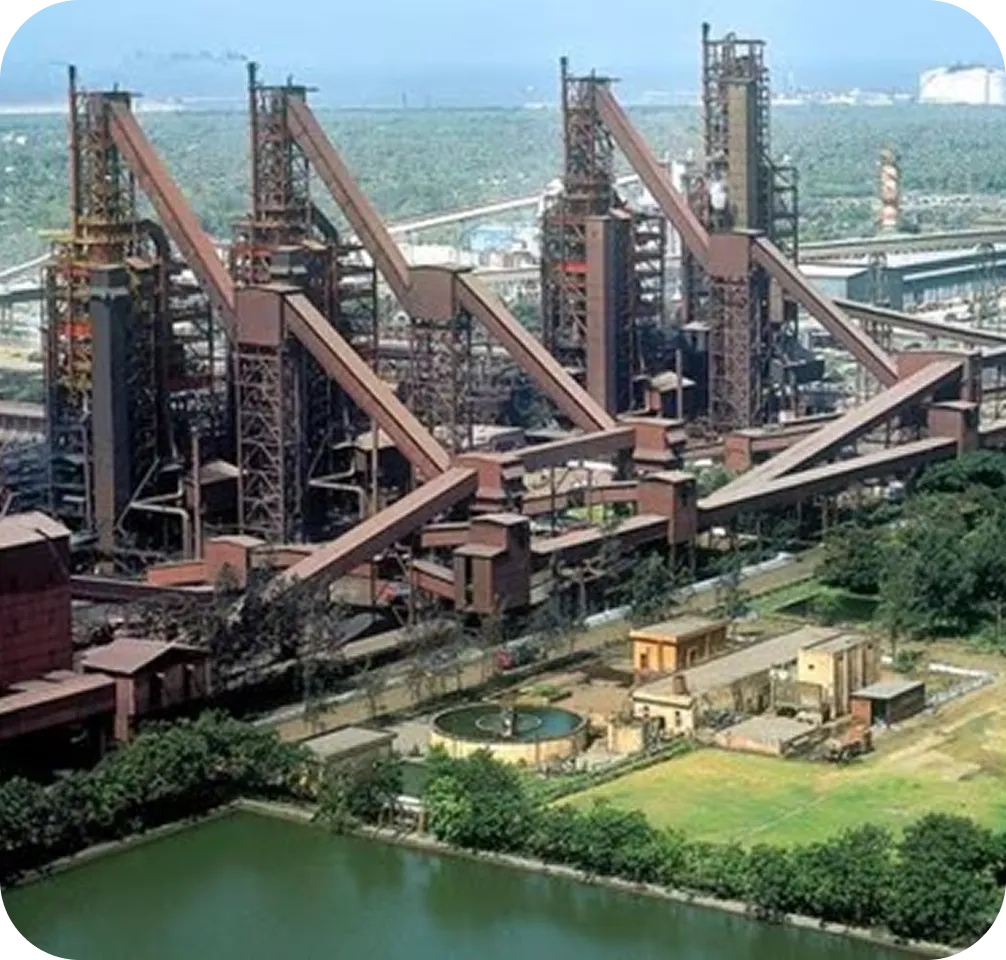
An NGO in Surat, India leveraged Google Earth imagery to document illegal construction and pollution, demanding the closure of a local steel plant. The satellite imagery from 2017 and 2020-21 was used as evidence to show that most of the proposed plant units had already been constructed without proper environmental clearance. A hearing was held to address the water, air, and land pollution complaints from 70 villages in the area.
Read the full story
Icon (1).svg
NGO in India uses Google Earth to demand action against polluting steel plant
Sustainability Climate resilience Crisis management Data contribution
Mobility in Belem
A massive influx of visitors requires a modernized city infrastructure. We started managing complex traffic flows and road closures for the major UN Climate Change Conference in Brazil. As a part of this framework, we coordinated traffic for thousands of international delegates and provided real-time road closure updates for local residents.
Read the full story
Icon (1).svg
COP30 mobility planning in Belém
Traffic management Crisis management Urban planning
Hollywood sign
Los Angeles used Waze and crisis response tools to help residents navigate safely during the Getty Fires with real-time evacuation zones and road closure information for over ±5,000 segments. The city managed to distribute 32 shelter locations through push notifications to 2.5 million drivers, enabling efficient evacuations and minimizing fuel use. The facilitated collaboration between Waze, 7 local community editors, Genesys (Zonehaven), and CalOES, enhanced overall disaster preparedness in the city.
Read the full story
Icon (1).svg
Wildfire evacuation support in Los Angeles
Crisis management Road safety Mobility
Rio de Janeiro
We partnered with “Where is the Shooting” to collect real-time security threats and armed violence. We integrated this critical safety data into the Waze navigation app, providing drivers with immediate alerts about potential hazards and enabling safety for residents in dangerous areas, especially the vulnerable populations. This initiative also allowed improved navigation for delivery drivers and taxi services, helping them find safer routes and minimize risks.
Read the full story
Icon (1).svg
Enhancing safety in Rio de Janeiro through collaboration
Crisis management Road safety Mobility
Haifa city
Tackling persistent traffic congestion at critical intersections can be a concerning issue for any city. Haifa uses Waze to optimize traffic light timing and reduce congestion at key city intersections. The result suggests an achievement of 30% reduction in traffic congestion at the targeted intersection, demonstrating the effectiveness of the system.
Read the full story
Icon (1).svg
How Haifa leverages Waze data to optimize traffic flow with smart intersections
Traffic management Mobility Urban planning Economic growth
Ghent city
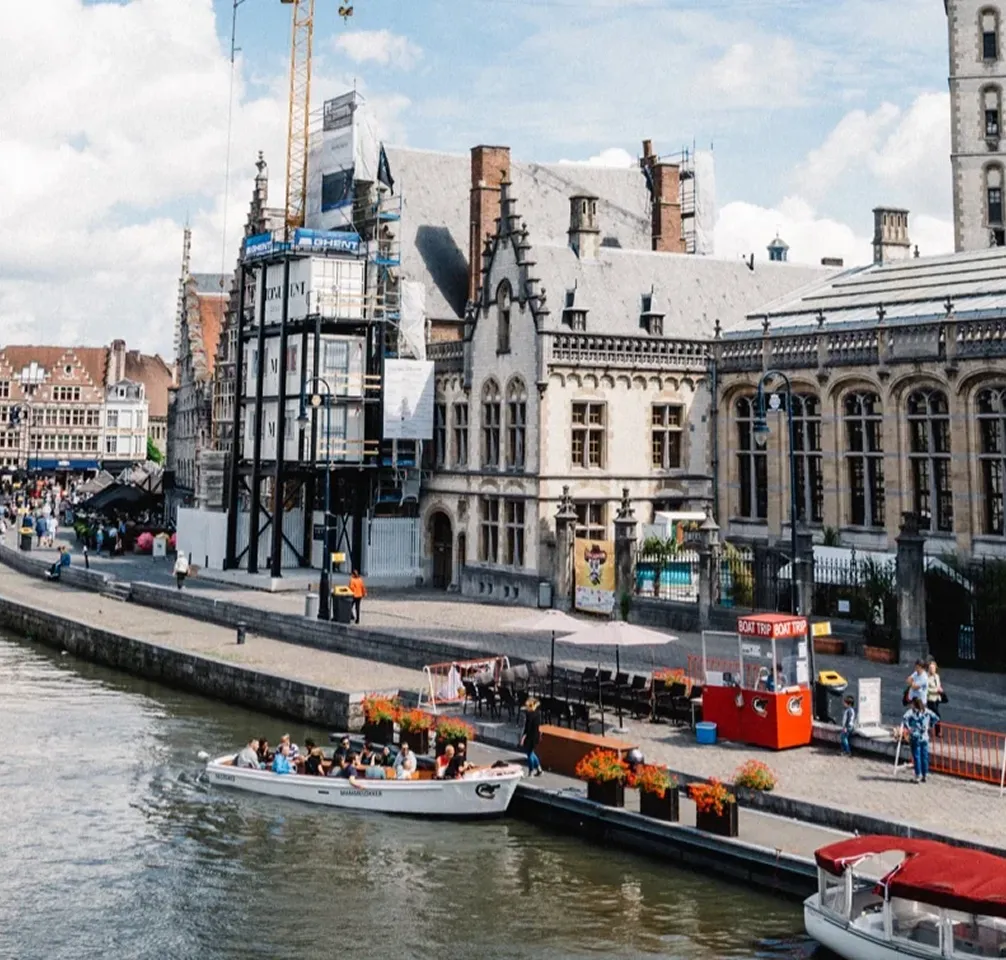
Moving from other parts of Ghent city without crossing the city center was impossible, drivers had no choice but to take the ring road. Google supported the city’s new circulation plan to discourage through-traffic and return streets to pedestrians. This change has made the city safer, reducing traffic and improving air quality with 30% less accidents, 15% more bus & tram users, and 27% more cyclists.
Read the full story
Icon (1).svg
Reducing city center traffic in Ghent
Urban planning Sustainability Traffic management Road safety
Quebec city
Traffic jams contribute to global challenges and transportation alone accounts for 15% of global greenhouse gas emissions. Quebec city becomes the first Canadian city to pilot AI traffic signal optimization to reduce stops and cut emissions. While pollution at city intersections is 29 times higher than on open roads, there’s potential to reduce stops by up to 30% and intersection emissions by up to 10%.
Read the full story
Icon (1).svg
Quebec is paving the way for efficient urban mobility
Sustainability Traffic management Climate resilience
Reducing urban emissions
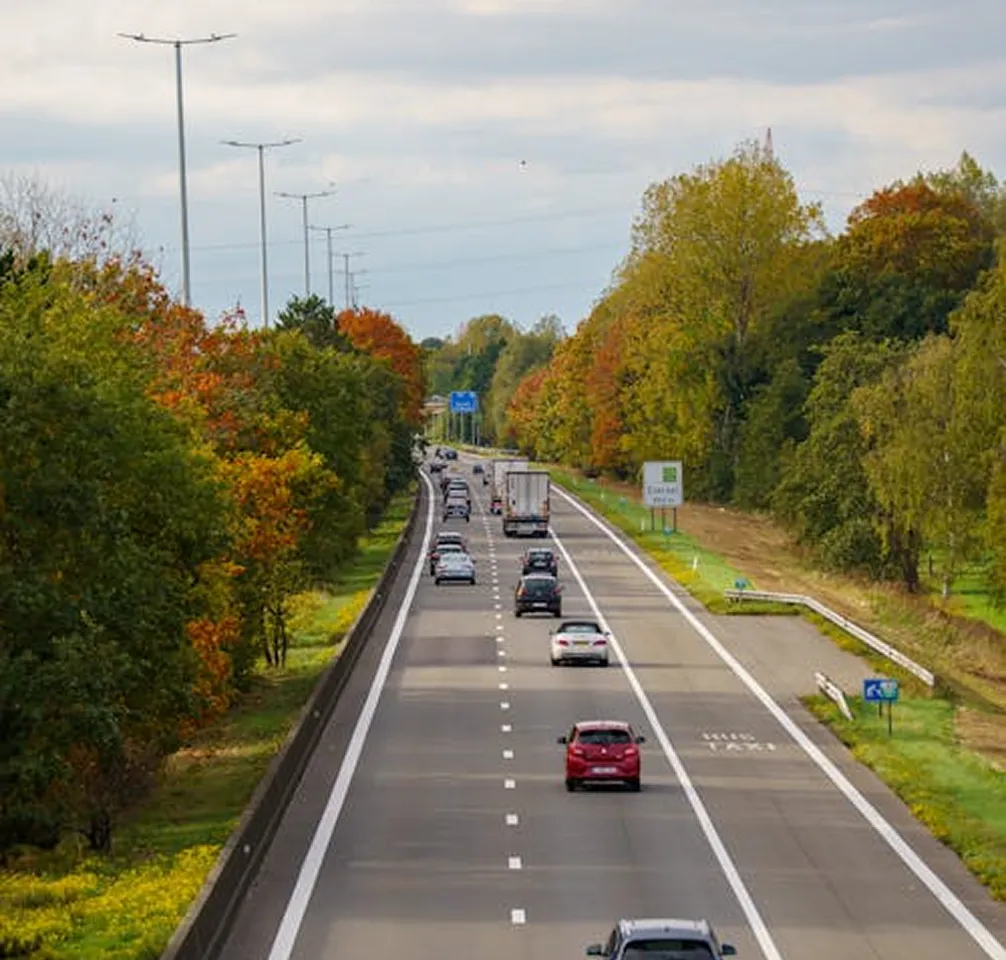
Road transportation is responsible for a significant amount of global and urban greenhouse gas emissions. About half of the emission at intersections comes from traffic starting and stopping. Google is helping cities improve air quality and traffic flow by optimizing existing traffic signals using AI. The results indicate up to 30% reduction at stops and up to 10% reduction at pilot intersections.
Read the full story
Icon (1).svg
How Project Green Light is working to reduce urban emissions using AI
Sustainability Climate resilience Traffic management
Solar API
The Solar API now provides data for more than 472 million buildings in over 40 countries. Coverage has been expanded to over 95% of all buildings in the United States, which is nearly double the previous coverage. This expanded coverage, along with AI-enhanced data, further helps businesses grow and homeworkers adopt solar energy.
Read the full story
Icon (1).svg
Solar API now covers more rooftops worldwide
Sustainability Economic growth Climate resilience Urban planning Data contribution

Voices of city leaders